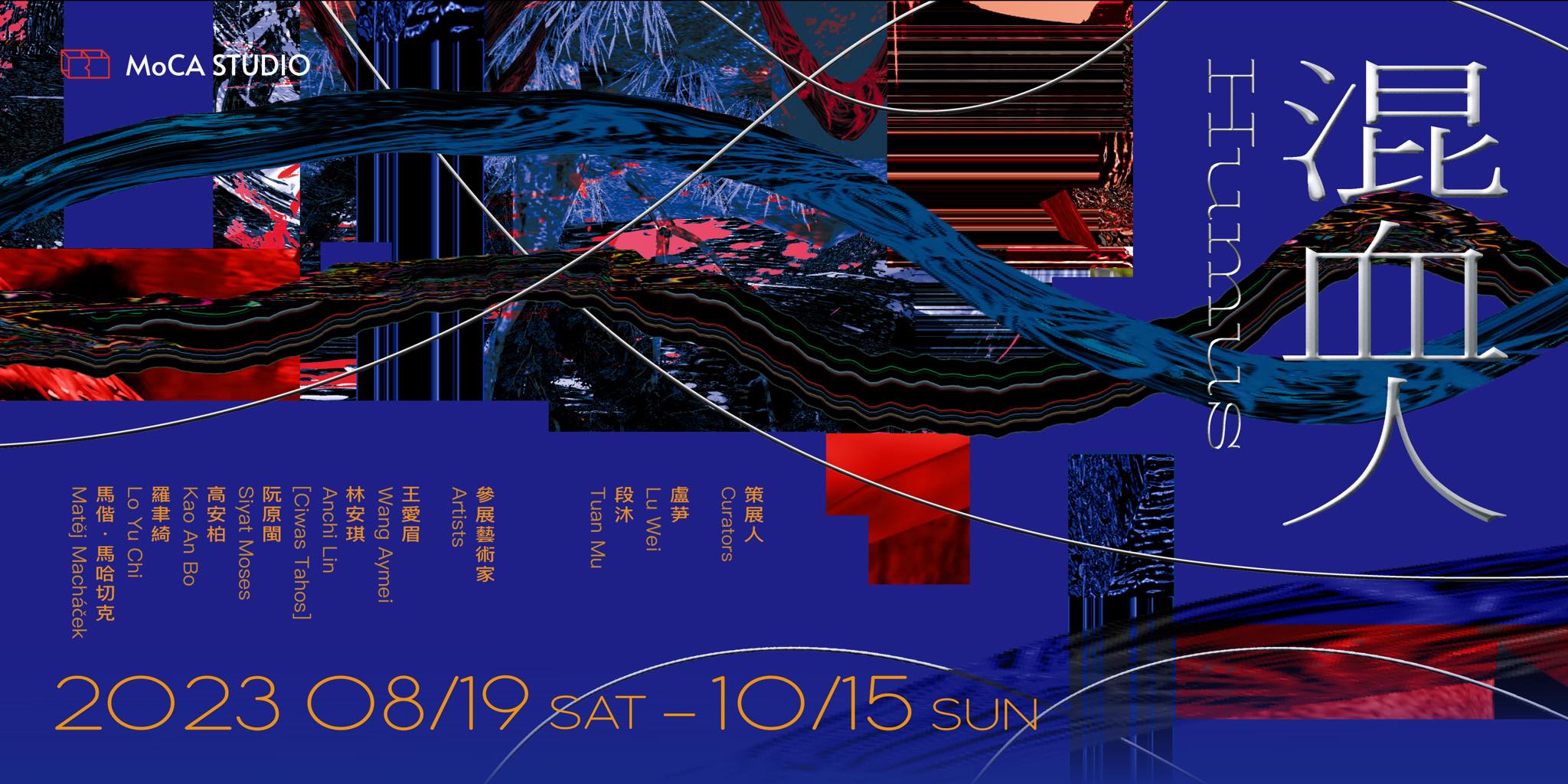
策展人Curator
盧芛 Lu Wei | 段沐 Tuan Mu
藝術家 Artists
王愛眉 Emilie Aymei Wang Aymei | 林安琪 Anchi Lin [Ciwas Tahos] | 阮原閩 Siyat Moses | 高安柏 Kao An Bo | 羅聿綺 聿綺Lo Yu Chi | 馬偕.馬哈切克 Matěj Macháček
展覽地點:台北當代藝術館 MOCA Studio、MOCA Video
展期:2023年8月19日(六)至10月15日(日)
開幕及記者會 : 2023年8月 18 日(五)14:00
開幕餐會:2023年8月 18 日(五)14:00
座談:2023年8月 19 日(日) 與談人:高森信男
主辦單位 | Organizers
台北市文化基金會 Taipei Culture Foundation
台北當代藝術館 MoCA TAIPEI
共同主辦 | Co-organizers
財團法人國家文化藝術基金會 National Culture and Arts Foundation
策展人培力@美術館 Curators’ Incubator Program at Museum
指導單位 | Supervisor
臺北市政府文化局 Department of Cultural Affairs, Taipei City Government
年度贊助 | Annual Sponsors
THERMOS 膳魔師 THERMOS
當代藝術基金會 Contemporary Art Foundation
財團法人紀慧能藝術文化基金會 Hui-Neng Chi Arts and Culture Foundation
老爺會館 Royal Inn
年度指定電視/螢幕 | Annual Sponsor for Appointed TV/Screen
SONY
媒體協力 | Media Cooperation
中央廣播電臺 Radio Taiwan International
This exhibition is inspired by a series of encounters on a trip to the Tafalong indigenous community: guided by the community , we climbed the sacred mountain of the Pangcah community – Cilangasan. With storytelling mixed with singing and through a muddy, stormy journey, the experience of climbing the sacred mountain resembled a process of approaching the sky and the story of the land. For the community, the process of climbing the mountain is a way to mature as a complete person. This gave rise to a realization: humans are never separated from our land, and we exist between storytelling and earth. We are remixing ourselves, our stories, and our land through our journey.
This remixing is reflected in the diversity of artwork media, the mixed, torn, and non-dichotomous state in the exhibition process, as well as the inseverable connection between human and soil—just like the word “human” of which the etymological root is “humus” (the organic component of soil, the decomposition of leaves and other plants).
The exhibition explores artists’ methods of interpretation when dealing with the issue of identity. Moreover, it also investigates how artists respond to the mixed and diasporic perspectives unveiled in the process of constant movement through the relationship between their works and themes of identity, food, gender, cultural memory, and storytelling.
Humus is a long-term curatorial project. The curators and some artists collaborated with tribal cultural workers and conducted several field trips to Hualien’s Tafalong tribe. During the severest period of the pandemic in Taiwan, the curators reconsidered the exhibition format and the feasibility of continuing the field survey. By virtualizing the routes of field trips through an online platform and incorporating the bodily sensation of climbing the sacred mountain, the endeavor has produced a document-based field space in virtuality. At the same time, it also showed the curators’ and the artists’ trajectory during the project, gradually realizing routes informed by multiple bodily sensations to reflect on their identity.
展覽源自一連串部落行旅中的相遇,某次透過族人們的帶領下爬登阿美族的聖山奇拉雅山(Cilangasan),在神話和吟詠的歌聲裡,暴雨交雜著泥土的旅途後,從攀爬聖山的經驗中,連結到人在趨近天空和神話的過程,總是無法和自己的土地分離,雖然不像族人在成年禮爬上聖山的儀式中,成為一個人,卻成為了夾在神話和土壤之間,具有多重身份的「混血人」。「混血人」不只是指藝術家的多元身份,也回應了作品媒材的多樣性,以及展覽過程中混合、撕裂且無法一分為二的狀態,即人和土壤難以分割的關係,如同“human”在詞源上有“humus”的意思,即壤土、腐植質。
展覽探討了藝術家在面對身份時所詮釋的方法,另一方面則是藝術家如何透過自身創作和部落之間的關係,以身份認同、飲食、性別、文化記憶和神話等主題,回應了在不斷移動的過程中,所開啟混合且離散的視野。
「混血人」作為長期的策展計畫,策展人和藝術家透過和部落文化工作者合作,幾次前往花蓮太巴塱部落踏查。而當臺灣疫情嚴峻時期,策展人重新思考展覽的形式,以及持續踏查的可行性。藉由線上平台將踏查的路徑虛擬化,結合了爬登聖山的身體感知,詮釋不同於文件式的虛擬田野空間,同時也是呈現了策展人和藝術家們在混血人計畫期間的時間軸,逐步實踐出多條思考自身文化和具有多重身體感的路徑。
MoCA Video展區
「洪水退去,大蛇、山蛙、蜥蜴與烏龜想要成為人,於是走向了山頂,那未知且閃耀著光芒的神靈故事,如鏡面般引領著人和靈之間的道路。混血人唱著歌,歌聲中混雜著呢喃、遷徙的記憶。山的內部劃出神話的空間,身體重返神聖的山徑。」
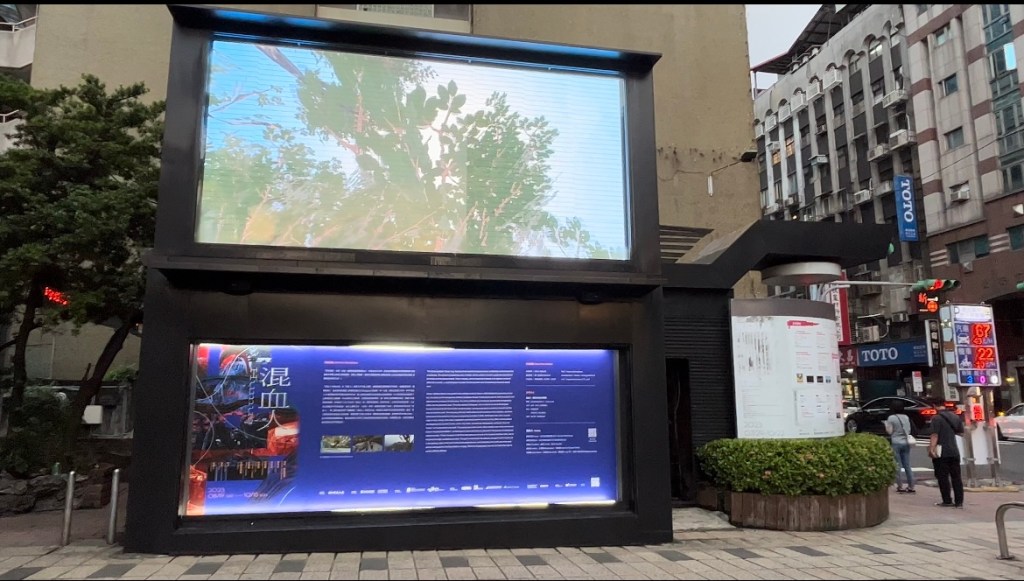
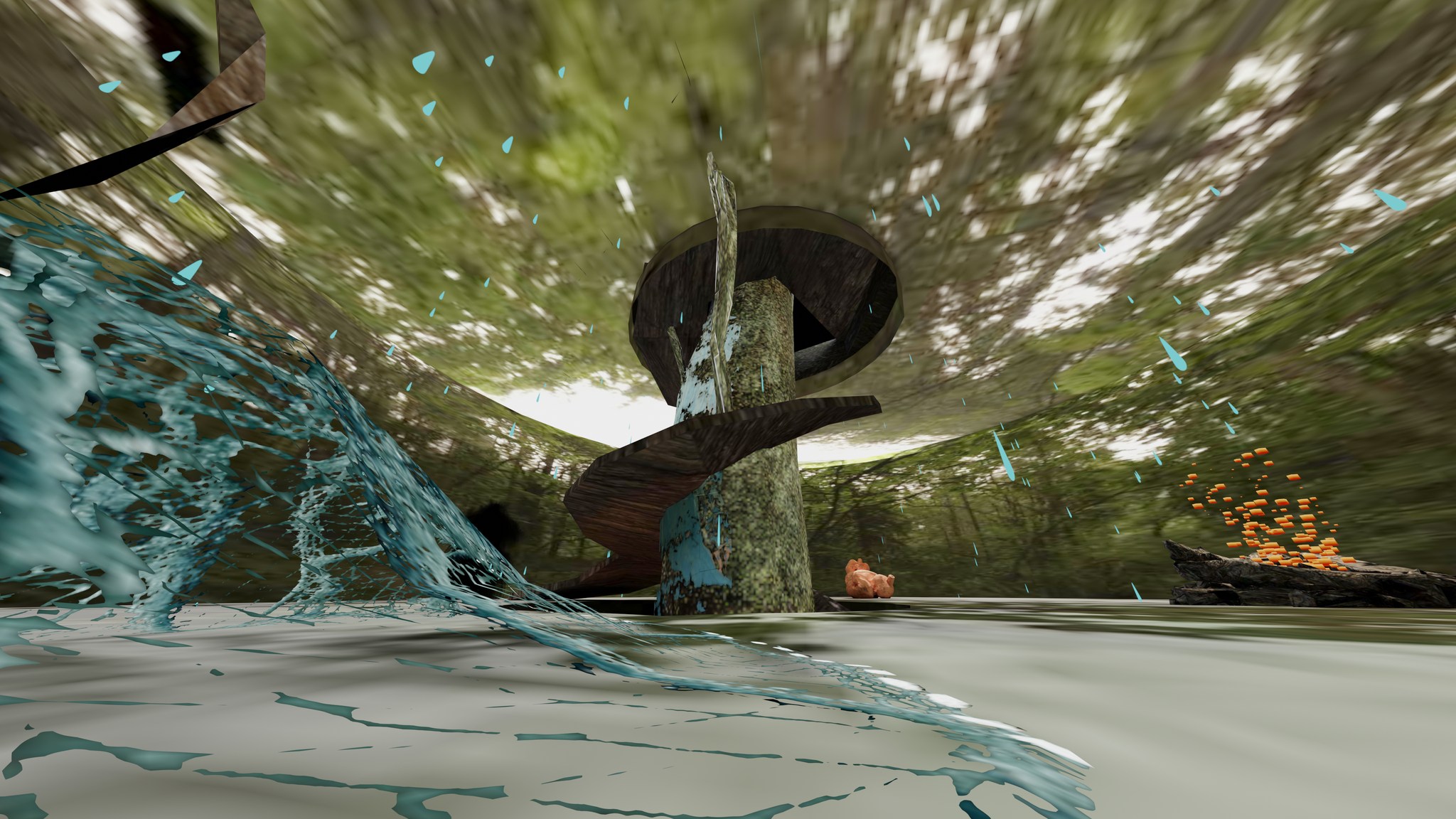
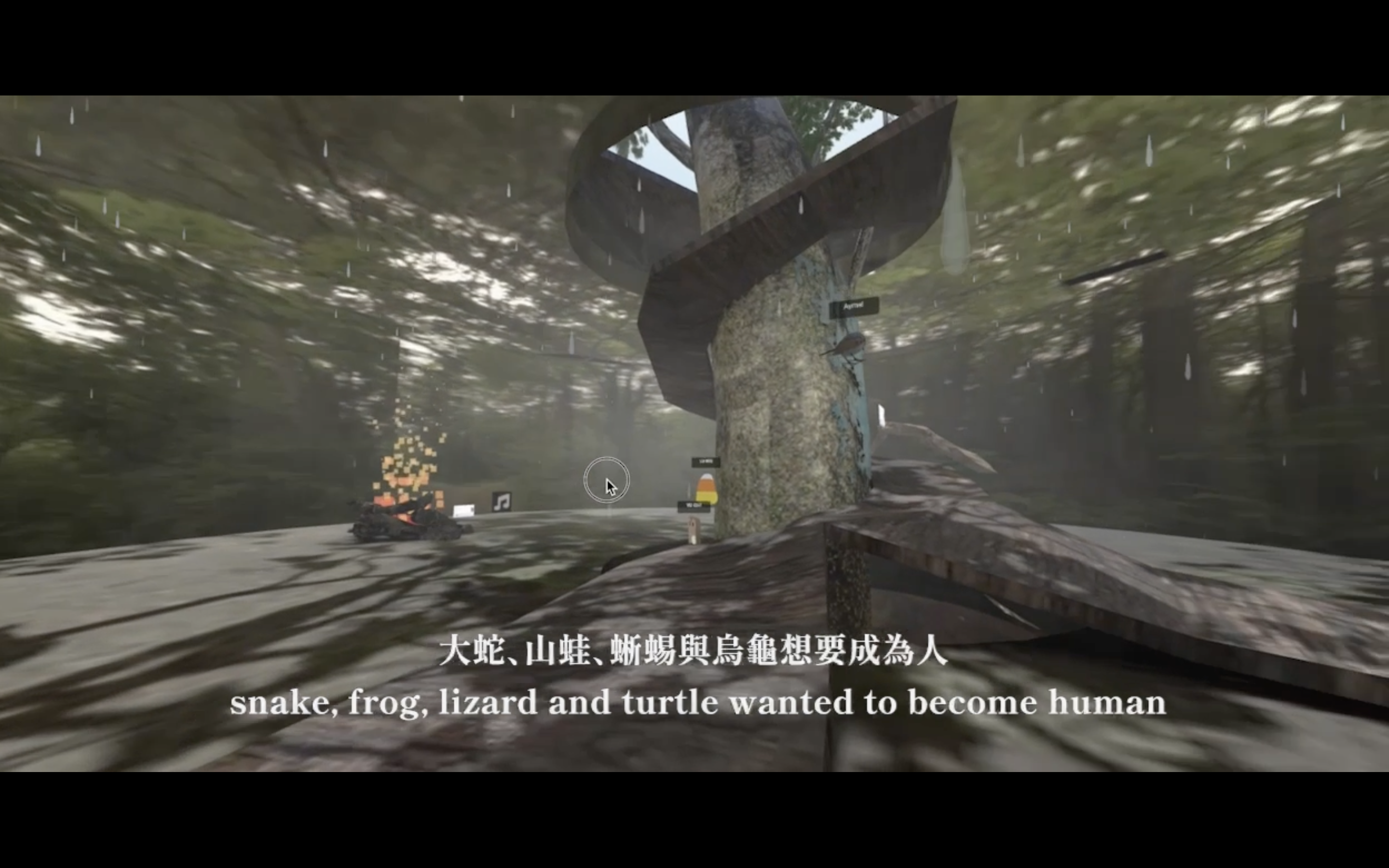
“The floods subsided. Snake, frog, lizard and turtle wanted to become human and therefore walked towards the mountaintop. The unknown but glistening story of deities, like the surface of a mirror, guides the way between humans and the spiritual worlds. There is singing, and it is mixed with whispers and migratory memories. Within the mountain, a mythical space is created. It is the mountain route for the body to return to sacredness.”
Medium: Single-channel video
Time: 4’30 | Year: 2023
Credit:
Online Exhibition Interactive Designer and Recorder: Wu Yan Lin
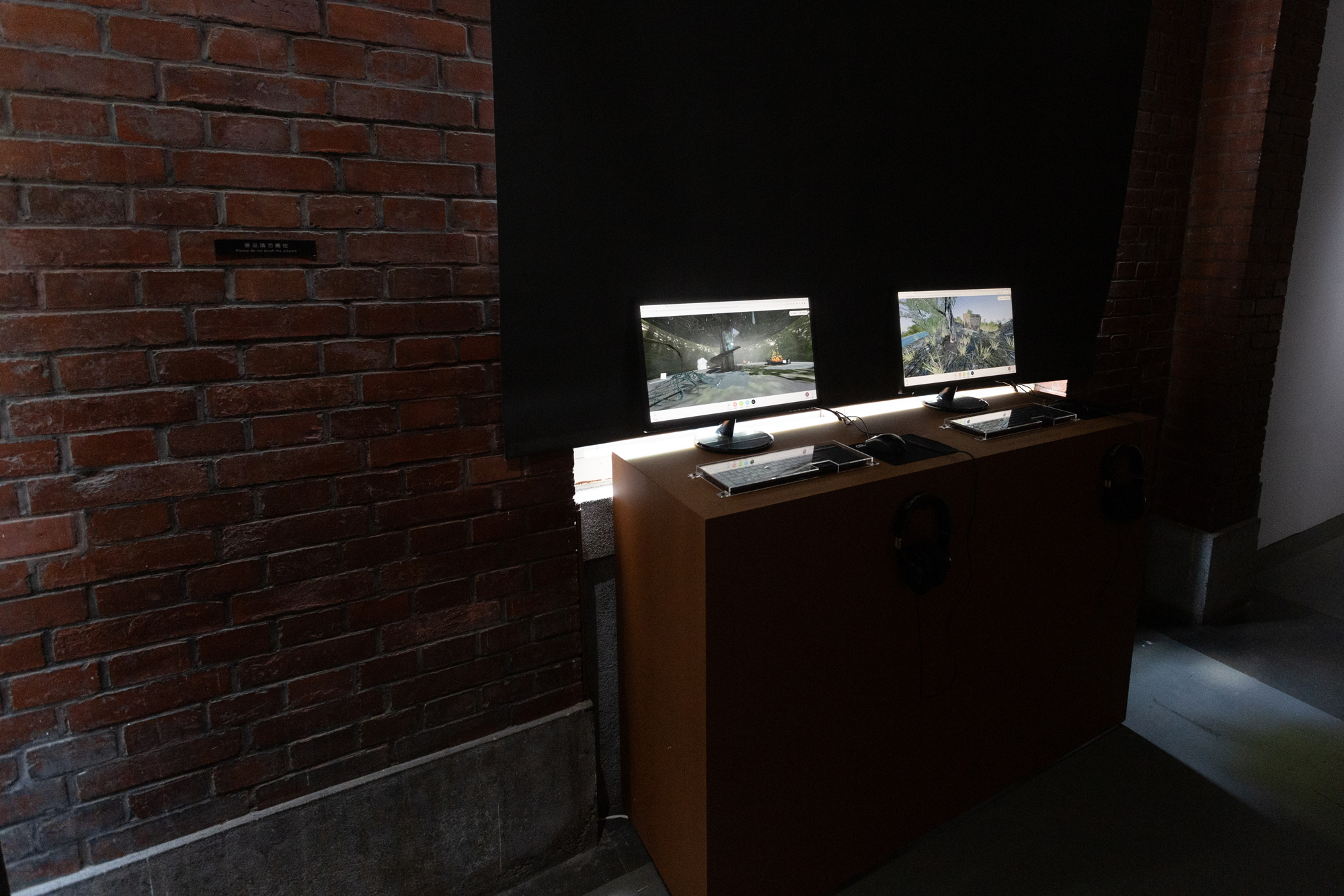
「混血人:神話山徑」為「混血人」展覽之平行線上展區,通過虛擬化田調過程中的聲音、身體感和空間,體現策展人、藝術家與部落族人攀登奇拉雅山(Cilangasan)的經驗。另一方面,展區也呈現三年間,參與「混血人」計畫的藝術家所發展出的數件作品。線上展區以抽象化的奇拉雅山為空間架構,中心的巨型生命樹貫穿了山體內部的三個樓層,作為爬登向上的階梯,也是復返神話的路徑。第一層的土壤如展覽的基底,建構了計畫初期的展覽,即發表於2020年的《混血人:來一場野性的餐會》的部分作品。土壤也是神話的起源,人與泥土黏膩且不可分的狀態,當向上離開土地,人與蛇、青蛙、蜥蜴與烏龜有了區別,進而如神話中所述的「成為人」。第二層的樹林延伸了實體展區「混血人」的部分作品,攀登聖山過程中的自然因素和情境。最後,第三層的空間作為神話山徑的終點,重新詮釋了石碑上的起源。觀眾透過虛擬的身體,從黑暗的泥濘中破土而出,在大雨的樹林裡傾聽神話,最後在歌聲之中來到了神話的終點與部落歷史的起點。當歌聲歇止後,彷彿也隨著神話的足跡走向不同的遠方。
Humus: Mythical Route is the parallel online exhibition zone of Humus, which displays the experience of curators, the artists and the tribal community members climbing Cilangasan through virtualizing the sounds, bodily sensations and space from the process of the field study. The online exhibition also showcases several works developed by artists over the past three years. The online exhibition zone is spatially structured as an abstract Cilangasan, with an enormous tree of life that goes through the three internal stories of the sacred mountain, serving as the stairs to climb the mountain and the route to revisit the myth. The first story is the soil, which serves as the foundation of the exhibition, and showcases some of the works from the past corresponding exhibition in 2020. At the same time, soil is also the origin of myth, hinting at the sticky, inseparable relationship between human and clay. When moving upward and departing from the land, human, snake, frog, lizard, and turtle are differentiated, and further “become human,” as it is described in the myth. The second story is the woods, which extends some of the works showcased in the physical exhibition, symbolizing the natural elements and situations in the process of climbing the sacred mountain. Finally, the space on the third story serves as the end of the mythical mountain route, and re- interprets the origin revealed by the stele. Through the virtual body, the audience emerge from the muddy soil in the darkness, listen to the myth in the woods amidst the rain, and eventually arrive at the end of the myth and the starting point of the tribal history in singing. When the singing stops, they seem to follow the myth towards a different distance.
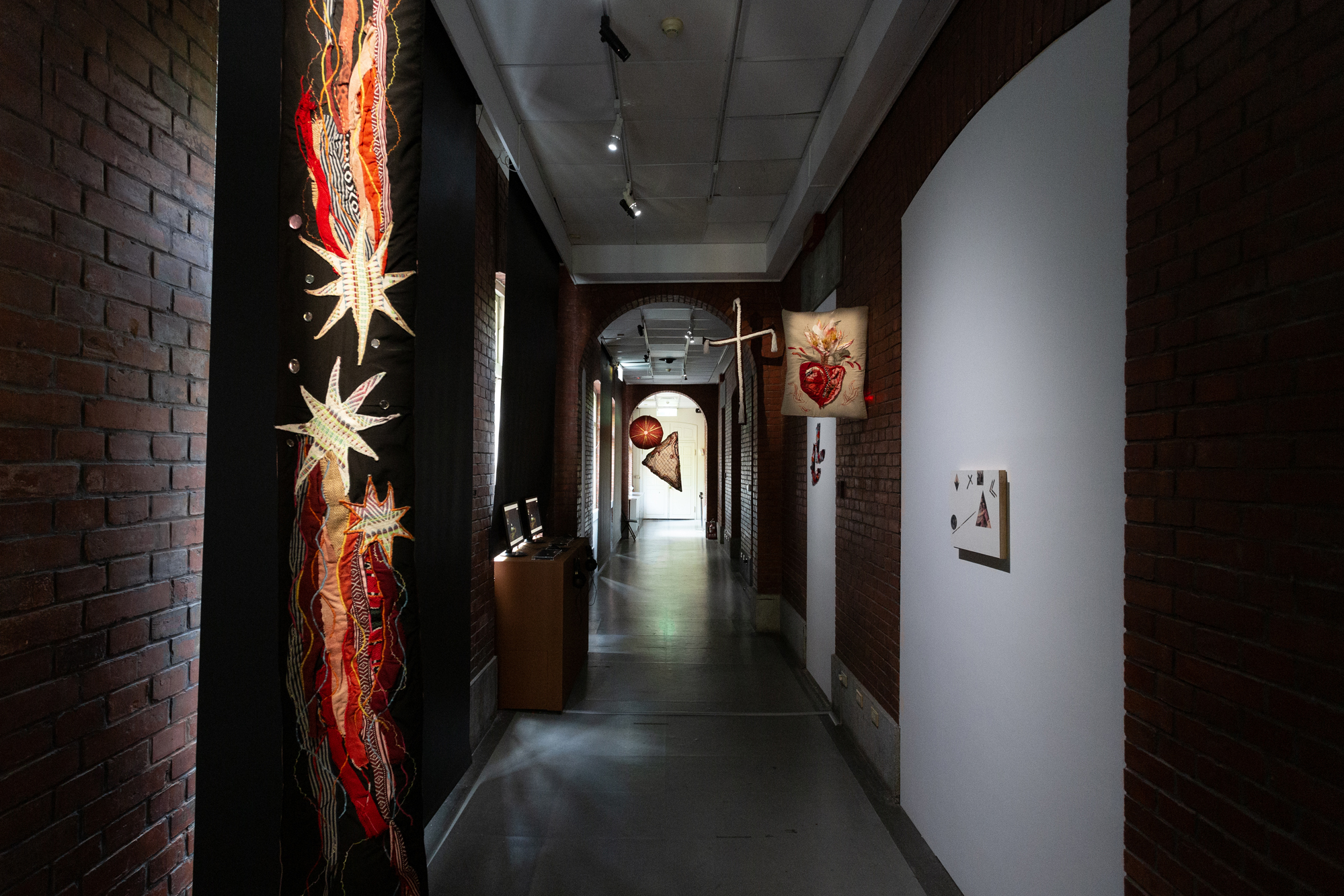
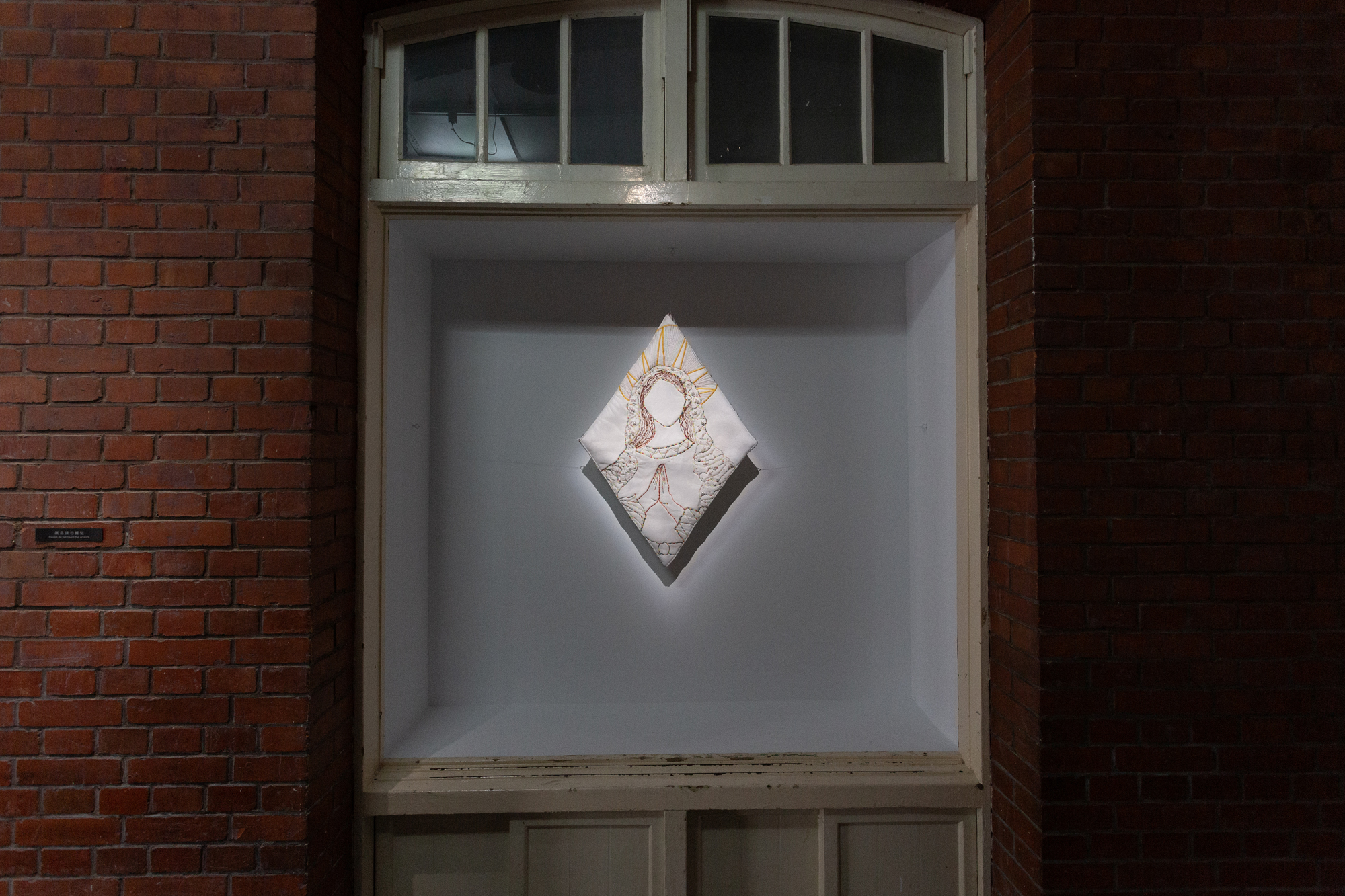
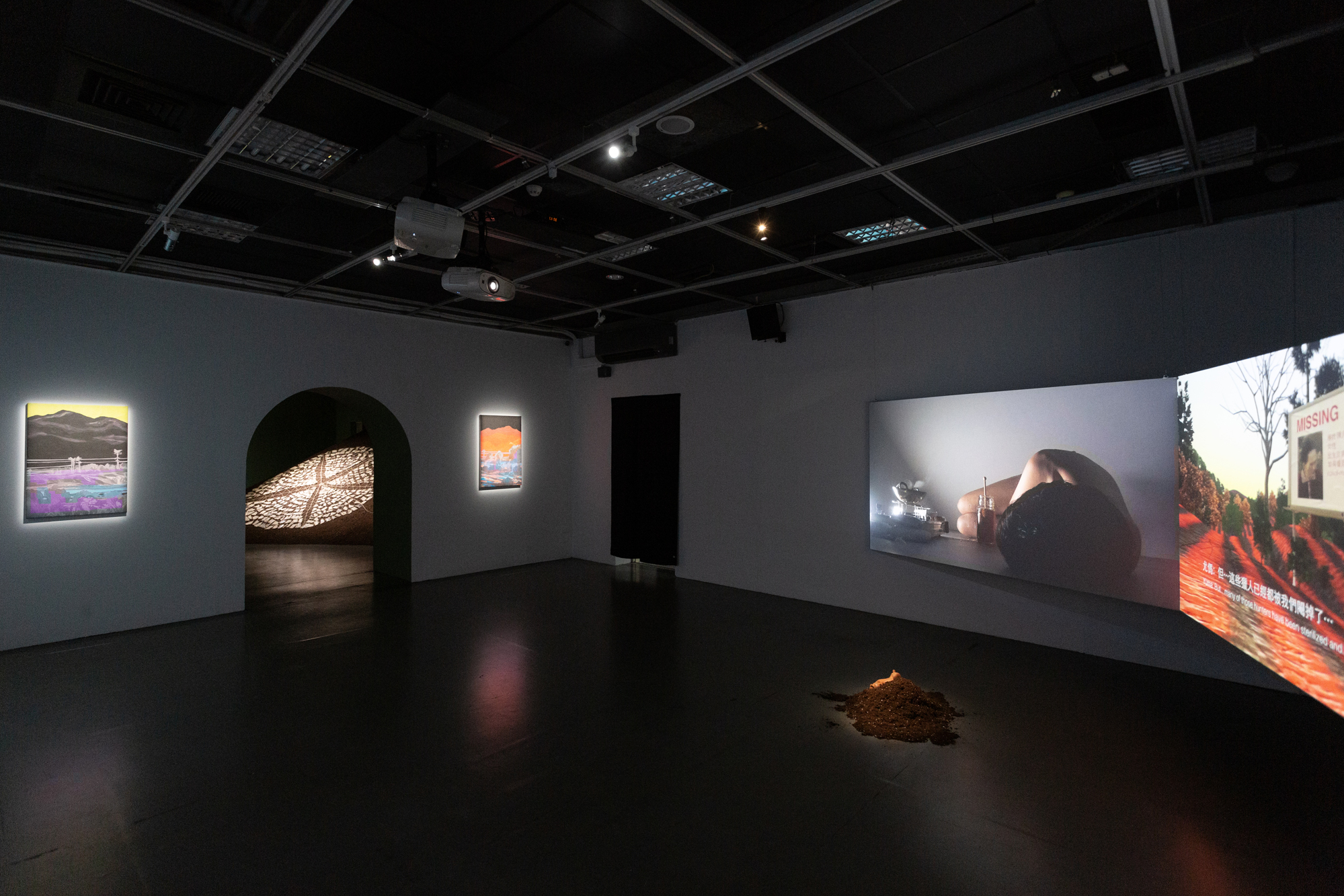
阮原閩《祢來了,之後》Siyat Moses, When the Gods came
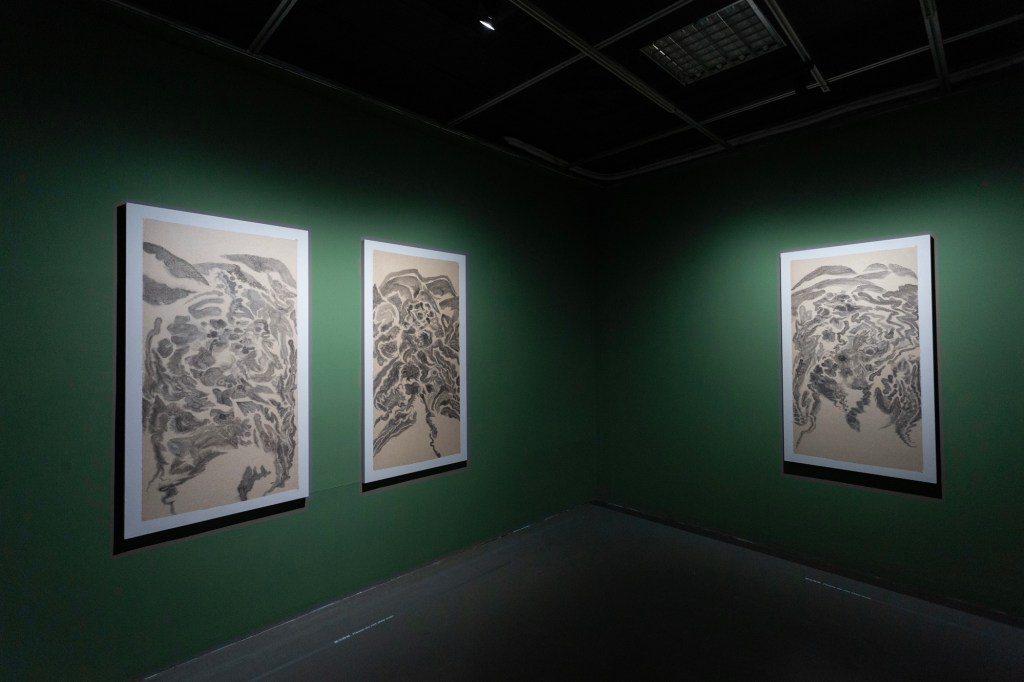
高安柏《奇拉雅山》Kao An Bo, Cilangasan
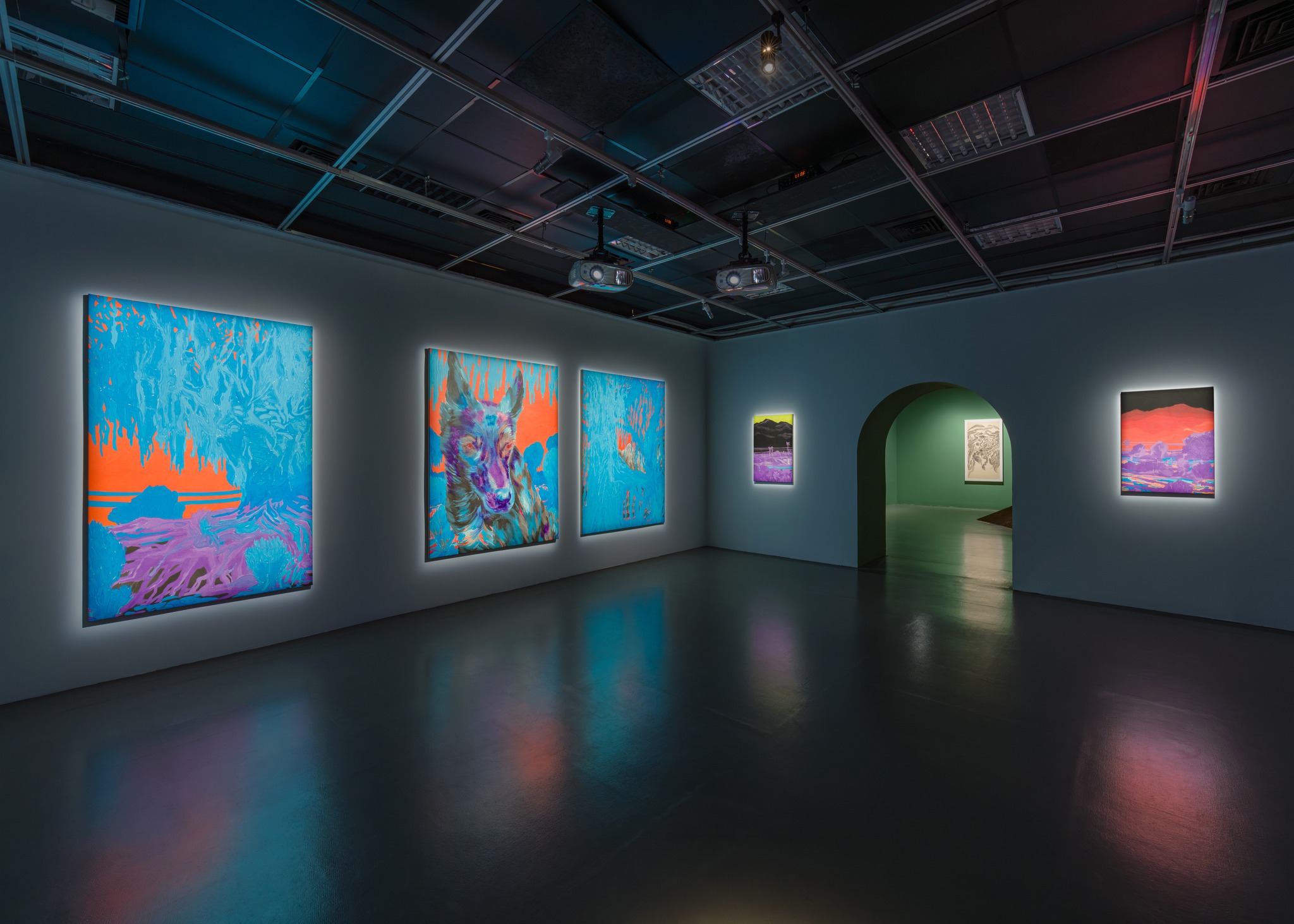
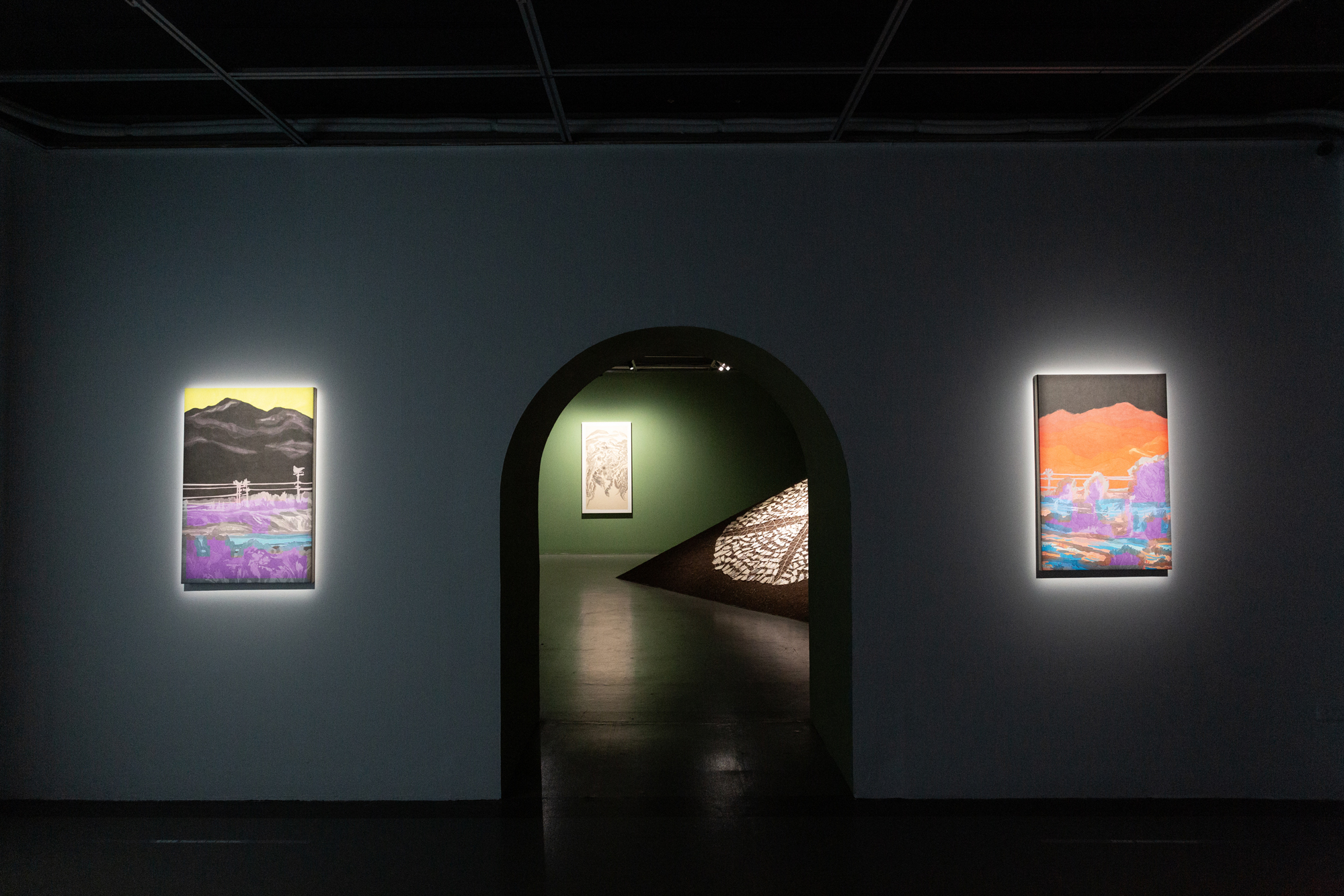
馬偕《聖山》系列Matěj Macháček’s series of paintings
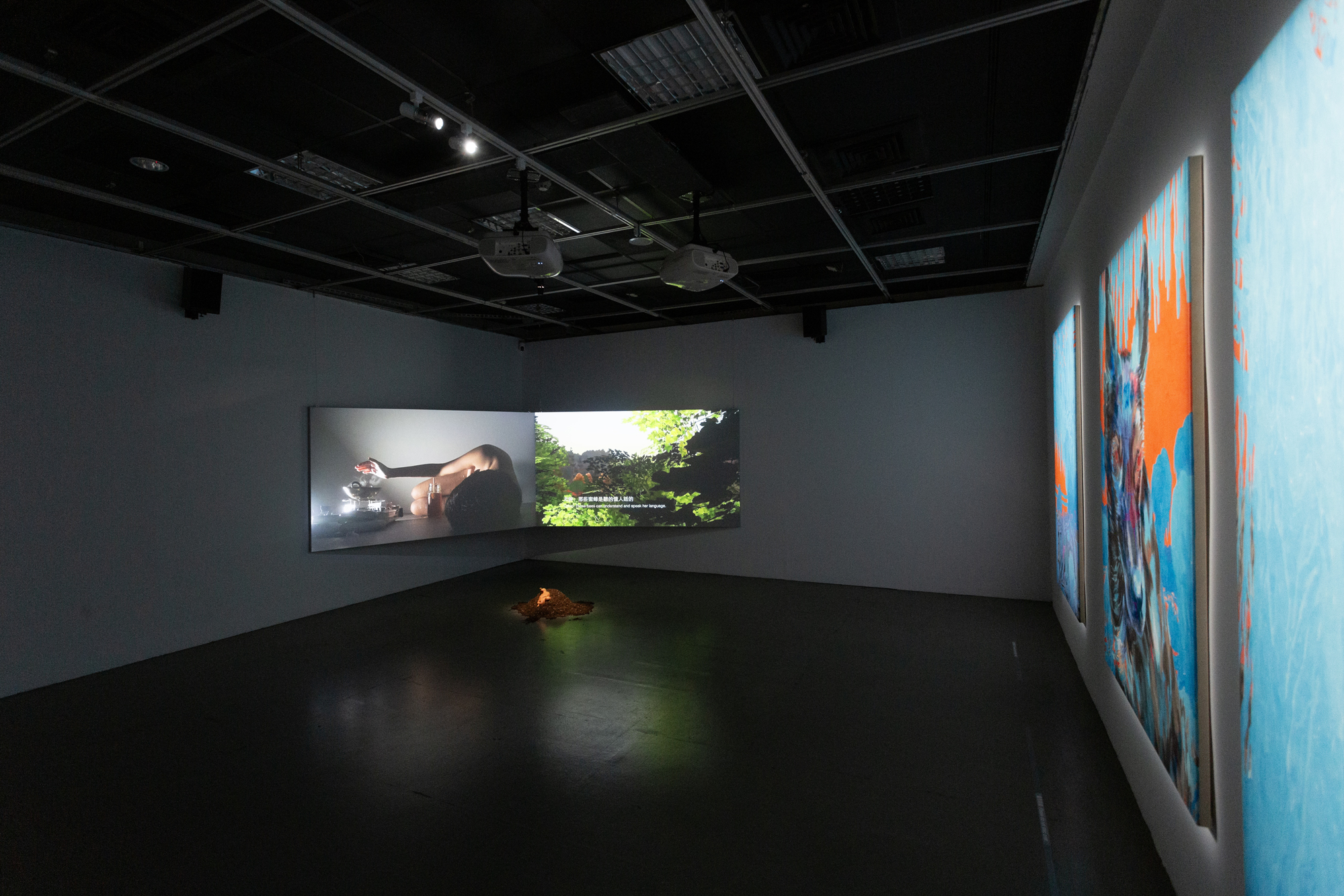
林安琪《她可能來自_社》和馬偕《聖山》系列。
Anchi Lin [Ciwas Tahos], Perhaps She Comes From/To_____Alang (left)
Matěj Macháček’s painting series (right)
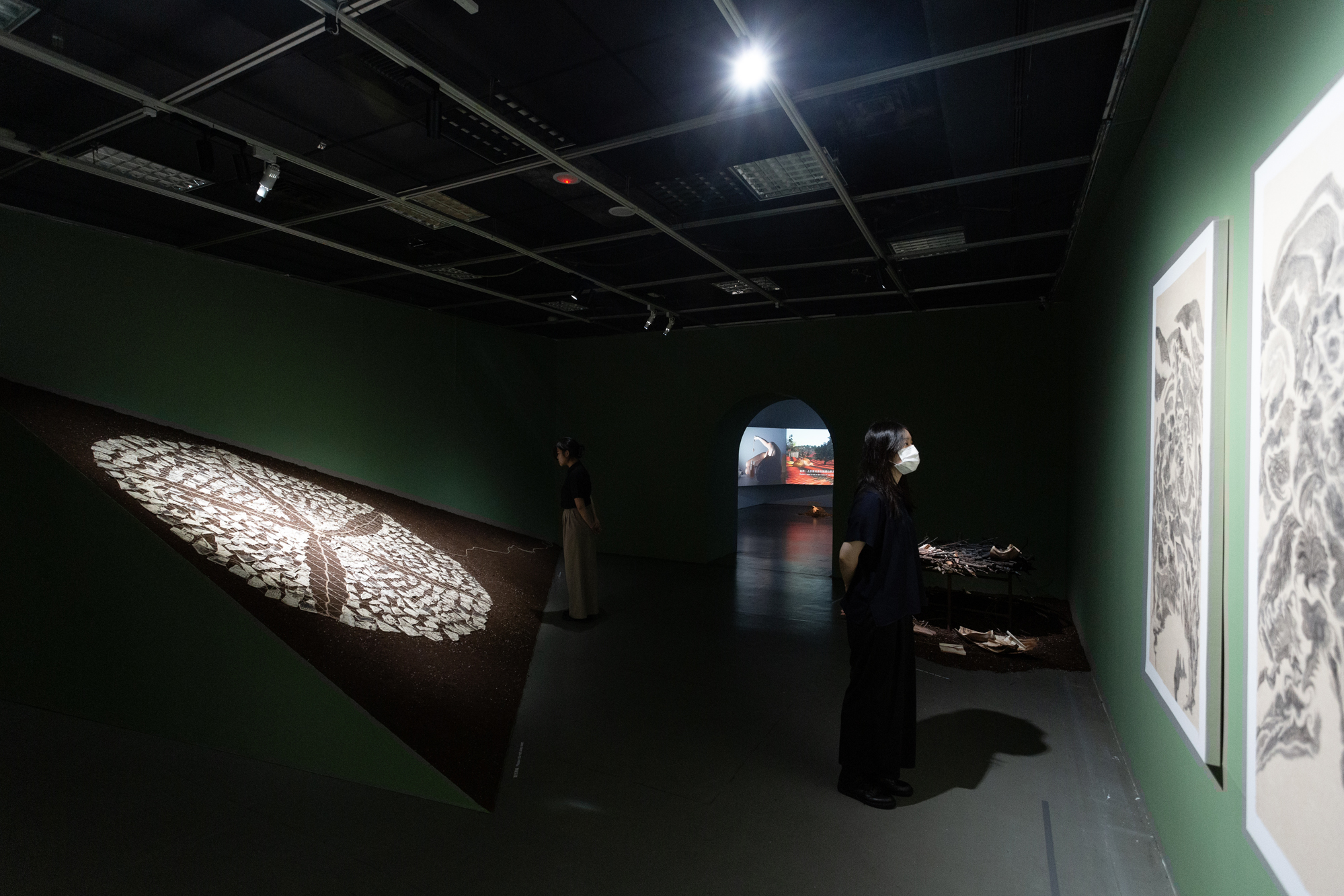
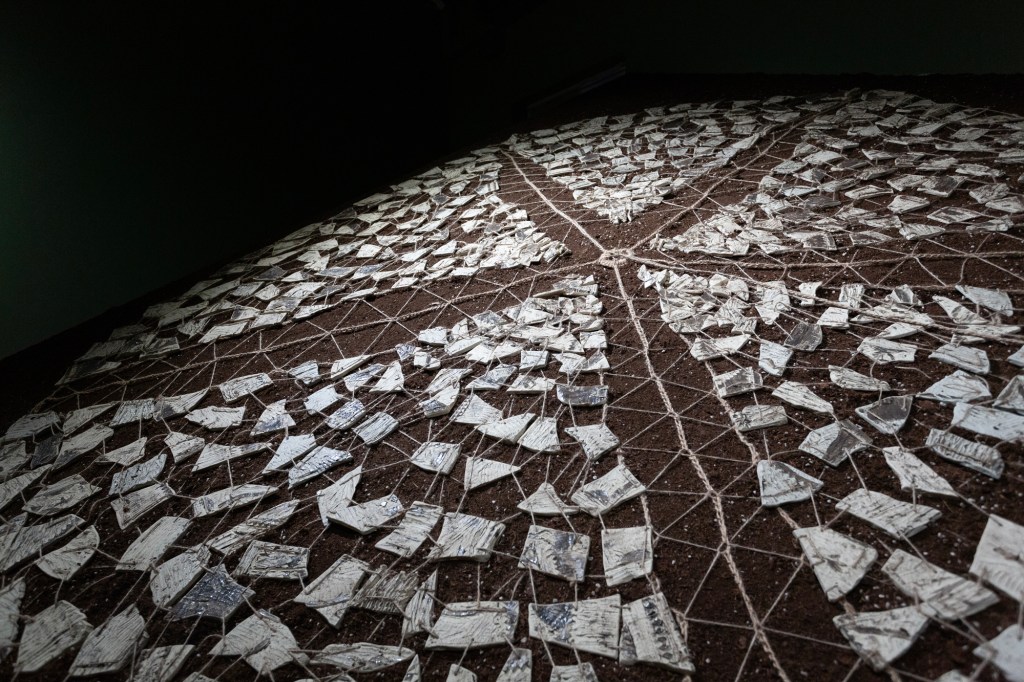
王愛眉《地臍》 Wang Aymei, Earthbound
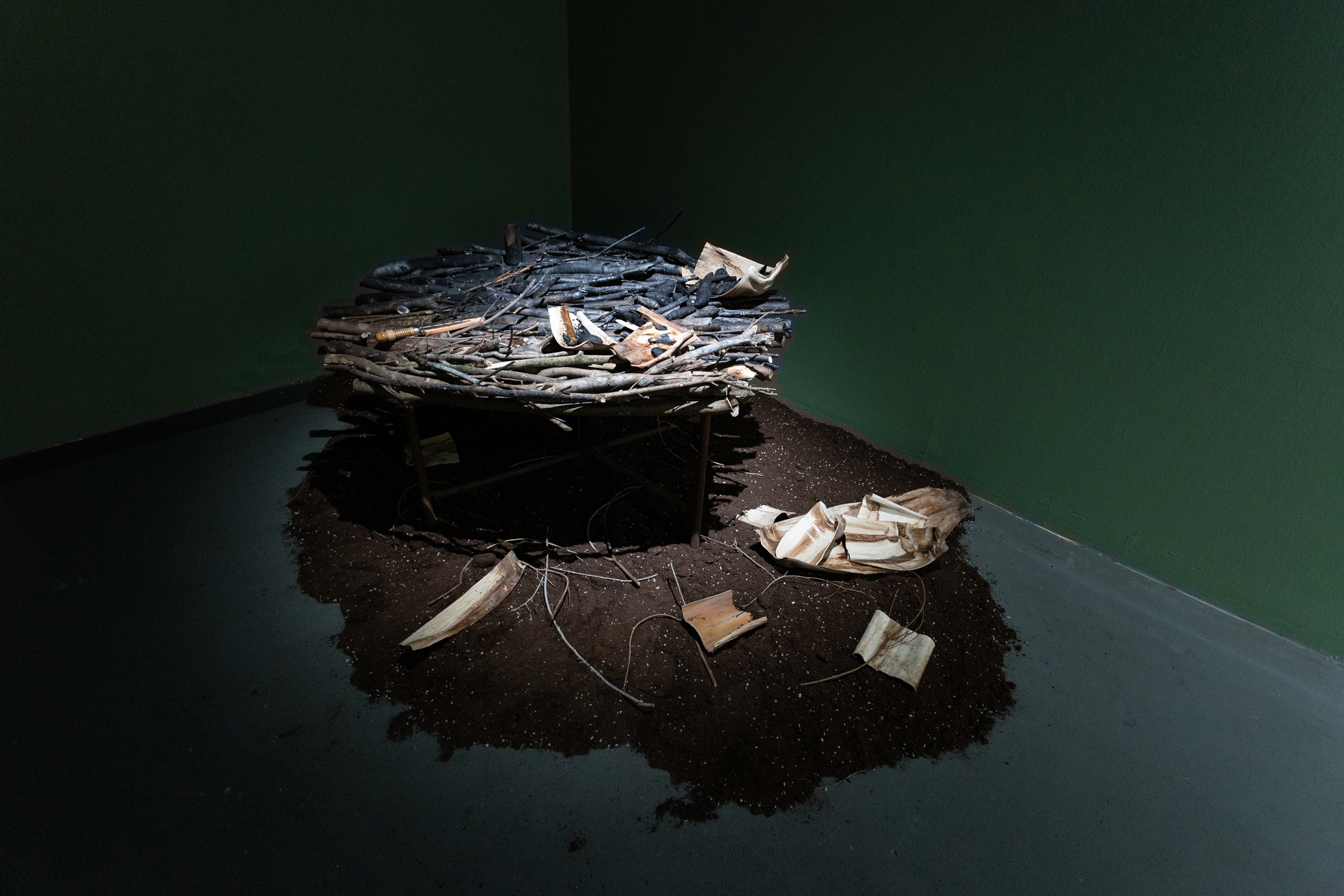
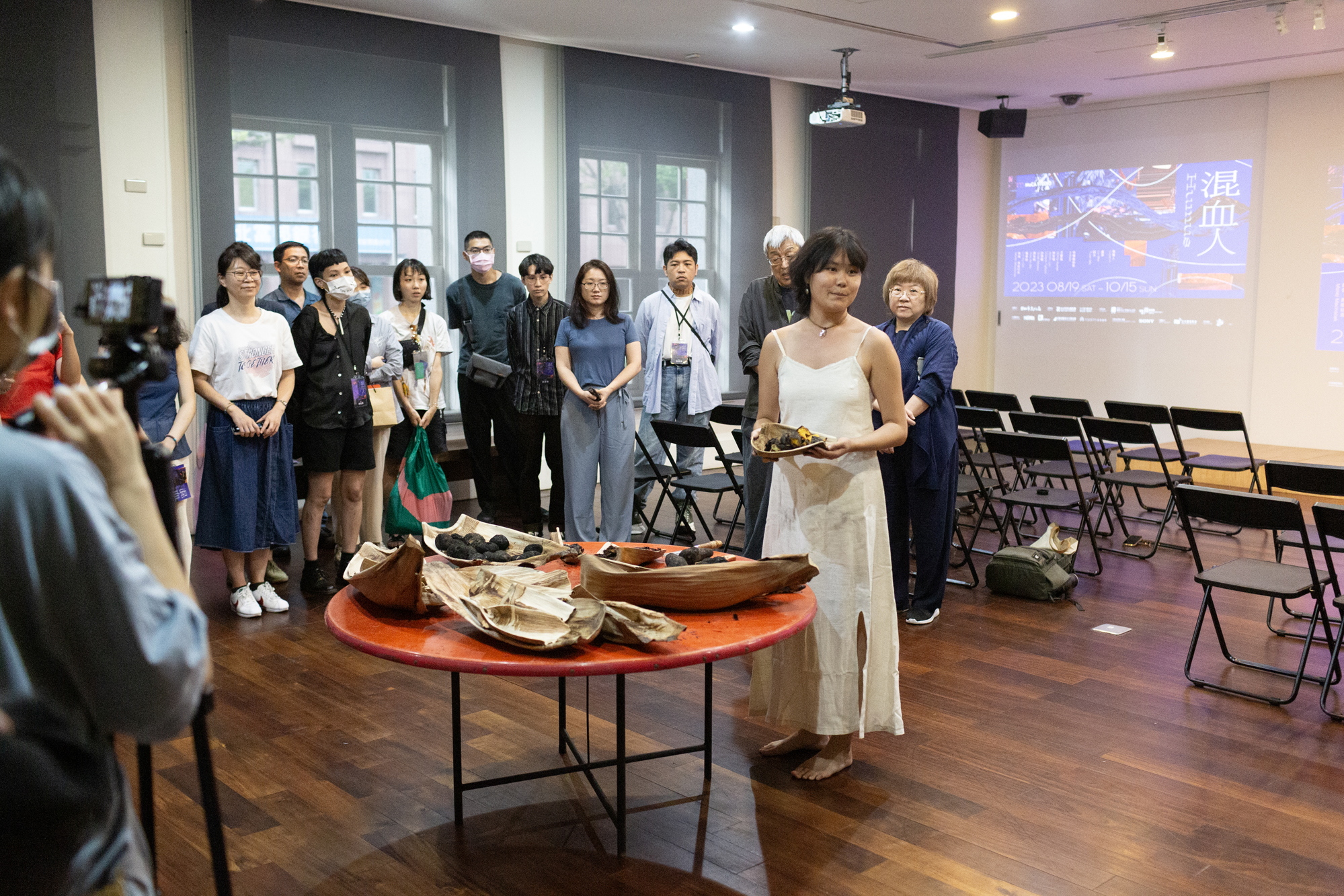
羅聿綺《吞吐、然然、炭色的黑》,及現場表演
Lo Yu Chi, Swallow, Burn, The black in the Ashes and live performance
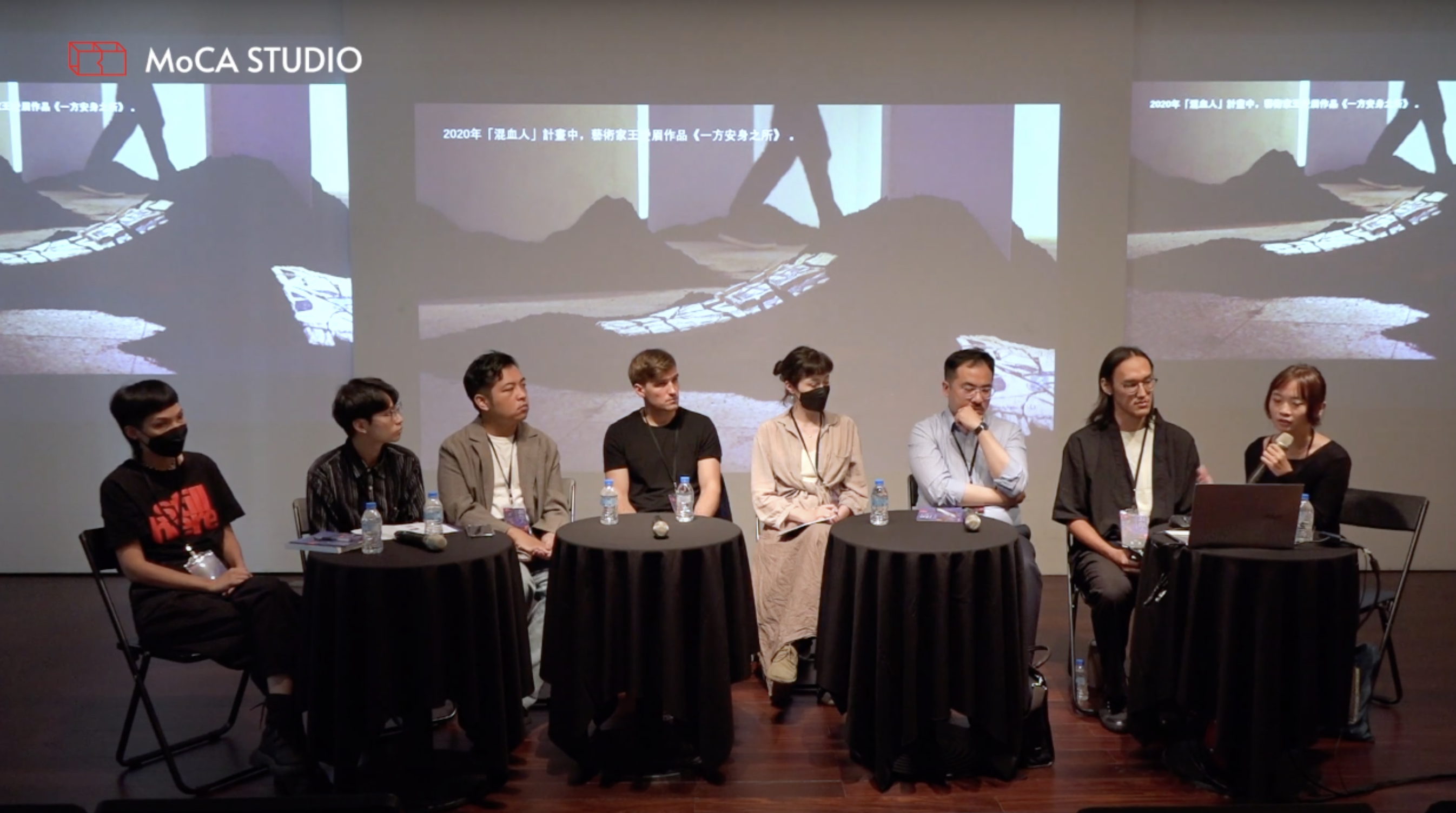
混血人:跨文化的合作策展座談
報導 News & articles:
- 國藝會線上誌
- 文化者 The Culturist:
【站在山頂尖呼喚自己】進部落登聖山 土地帶給台灣藝術家的靈魂拷問 - 青年日報:MoCA Studio「混血人」展 多元藝術饗宴
- 非池中藝術
- 500輯
- 藝點新聞
- TRAVELER Luxe旅人誌
- 城市美學
- 原視新聞網
- 人間福報
- OwlNews
Related article 相關文章: Humus: Communities 混血人:部落踏查
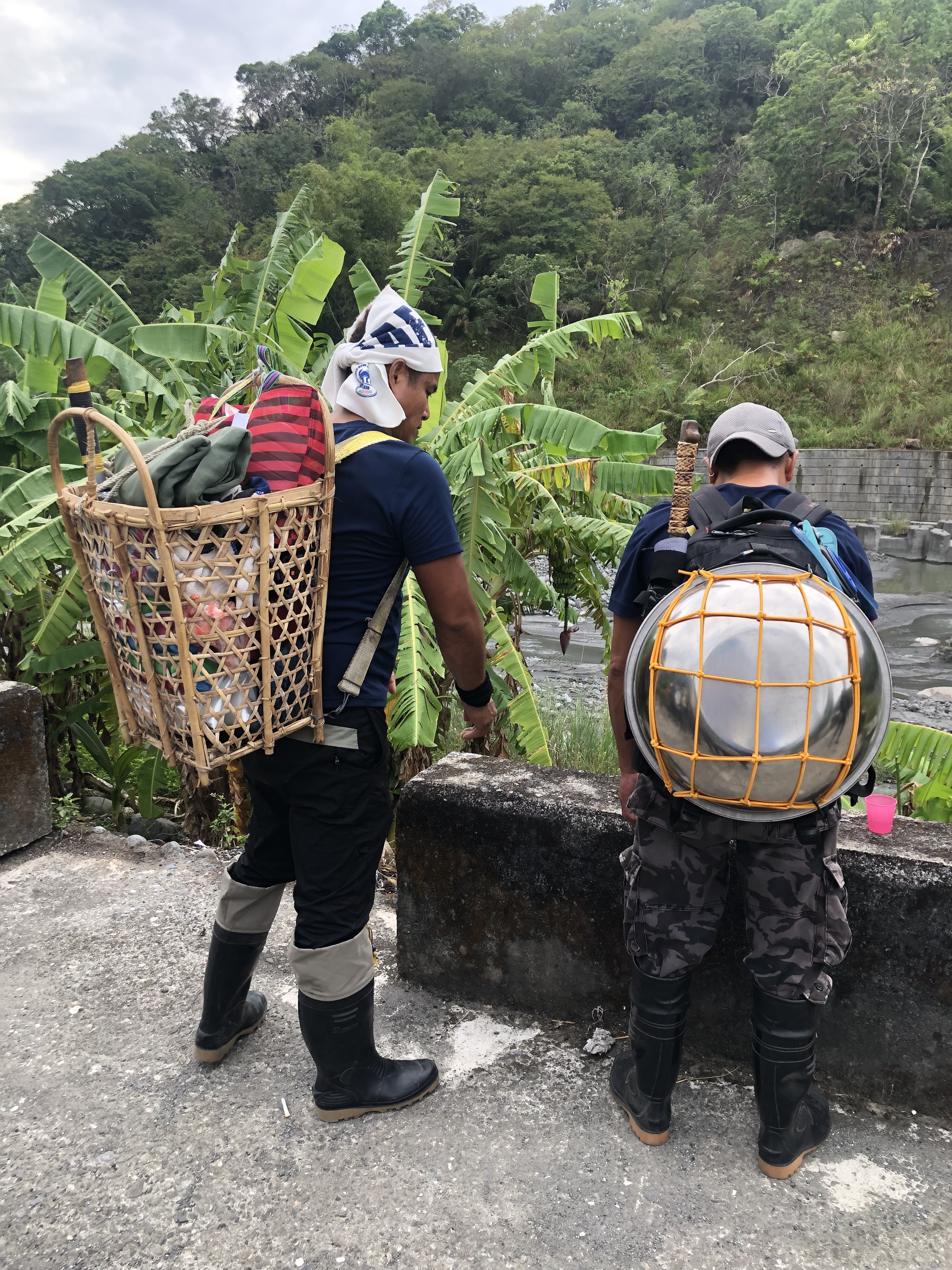

 Lu Wei